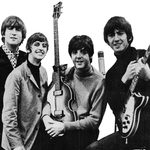
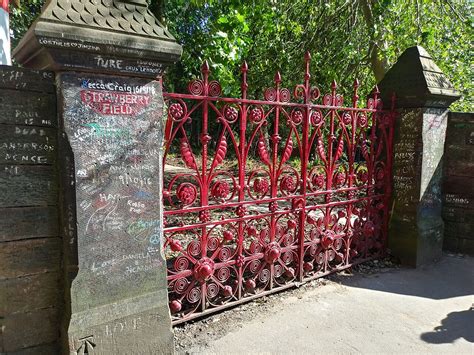
Few songs in the history of popular music have generated as much discussion as Strawberry Fields Forever. More than sixty years after its release, it remains one of The Beatles’ most admired recordings and one of the most personal songs John Lennon ever wrote.
At first glance, the answer to the question seems straightforward. Lennon wrote the song because he was remembering Strawberry Field, a Salvation Army children’s home near where he grew up in Liverpool. However, the real story is far more interesting than that.
Strawberry Fields Forever was not simply a song about a place. It was a song about memory, identity, childhood, fame and the search for meaning. It emerged at a crucial moment in Lennon’s life when The Beatles were changing, popular music was evolving and Lennon himself was becoming increasingly introspective.
The song captured a side of Lennon that listeners had only occasionally glimpsed before. Instead of writing about romance or telling a story, he was writing about himself.
Understanding why John Lennon wrote Strawberry Fields Forever helps explain not only the song itself but also the man who created it.
From chart-topping classics and hidden album tracks to song writing history, recording details, song meanings and fascinating facts, discover the stories behind some of the greatest songs ever recorded.
John Lennon In 1966
To understand the origins of Strawberry Fields Forever, it is important to understand where John Lennon found himself in 1966.
The Beatles had conquered the world. In just a few years they had gone from playing clubs in Liverpool and Hamburg to becoming the most famous musicians on the planet. Their records dominated charts across the world, their films attracted huge audiences and every public appearance generated extraordinary attention.
Yet behind the success, things were changing.
The pressures of fame had become increasingly difficult to manage. Touring had become exhausting and often frustrating. Audiences screamed so loudly that the band could barely hear themselves perform. The music they were creating in the studio was becoming more sophisticated, yet it was almost impossible to reproduce live.
In August 1966, The Beatles made the decision to stop touring altogether.
It was one of the most important decisions in the band’s history.
For Lennon, it also created an opportunity to reflect. For years he had lived at an almost impossible pace, moving from recording sessions to concerts, interviews and film appearances. Suddenly there was space to think.
That period of reflection would eventually produce Strawberry Fields Forever.
Readers interested in the wider story of this period can learn more in our articles on John Lennon and The Beatles.
Discover detailed guides to every Beatles album, from Please Please Me through to Let It Be. Learn when each album was recorded and released, explore complete track listings and uncover the history behind the records that changed popular music forever.
A New Direction For Lennon
Although Lennon had always been a gifted songwriter, much of The Beatles’ early material focused on relationships and youthful experiences.
By the mid-1960s, however, his writing was becoming more personal.
Songs such as Help! revealed vulnerability beneath the band’s public image. In My Life explored memory and nostalgia in a way that few pop songs had attempted before. These songs hinted at a songwriter who was becoming increasingly interested in examining his own thoughts and experiences.
Strawberry Fields Forever represented the next step in that evolution.
Instead of hiding behind characters or conventional love-song themes, Lennon began writing directly about his own feelings. The song reflected uncertainty, self-awareness and introspection.
Many Beatles historians regard it as one of the first occasions on which Lennon fully embraced autobiographical songwriting.
Alone In Spain
One of the most important parts of the Strawberry Fields Forever story took place hundreds of miles away from Liverpool.
In late 1966, Lennon travelled to Almería in southern Spain to appear in Richard Lester’s anti-war film How I Won the War.
The experience was unusual for him. For the first time in years, he found himself separated from the constant activity surrounding The Beatles.
Away from England and away from the pressures of Beatlemania, Lennon had time to think.
He spent long periods writing and reflecting on his life. During those weeks in Spain, memories of Liverpool began returning with unusual clarity.
Distance often changes the way people think about home. Places that once seemed ordinary suddenly become important. Childhood experiences take on new significance. Familiar locations become symbols of a simpler time.
For Lennon, one of those places was Strawberry Field.
While he was physically far from Liverpool, his imagination repeatedly returned there.
The first ideas that would eventually become Strawberry Fields Forever began to emerge during this period.
Why Childhood Memories Returned
One of the most fascinating aspects of the song is that it was written by a globally famous musician looking back on experiences from his childhood.
The obvious question is why those memories became so important in 1966.
Part of the answer lies in Lennon’s personality.
Throughout his life, Lennon remained deeply connected to his early experiences. His childhood was often complicated and emotionally challenging. Raised primarily by his Aunt Mimi, separated from his parents for much of his early life and frequently searching for stability, Lennon carried those experiences with him into adulthood.
As he became more reflective during the mid-1960s, he increasingly turned to those memories for inspiration.
Strawberry Field was one of the locations that remained particularly vivid in his mind.
It represented a period before global fame, before endless public scrutiny and before the pressures that came with being a Beatle.
When Lennon looked back towards Strawberry Field, he was not simply remembering a physical location. He was remembering a version of himself.
More Than A Children’s Home
Many people assume that Strawberry Fields Forever is simply a song about the famous Liverpool landmark.
In reality, Strawberry Field was important not because of what it was but because of what it represented.
The real Strawberry Field was a Salvation Army children’s home in Woolton, Liverpool. Lennon lived nearby at Mendips with Aunt Mimi and often visited the area as a child.
The location itself has been explored in detail in The Real Strawberry Field: Everything You Need To Know, but for Lennon the significance went much deeper than geography.
The site became associated with freedom, imagination and adventure.
As a child, the grounds felt mysterious and exciting. They offered opportunities to explore, play and escape from everyday life. The annual summer fêtes held there became some of his happiest memories.
Years later, Strawberry Field became a symbol of those feelings.
The song is therefore not really about a children’s home. It is about what that place came to mean in Lennon’s imagination.
Learn more about the four musicians who changed popular music forever. Explore the lives, careers and contributions of John Lennon, Paul McCartney, George Harrison and Ringo Starr, from their Beatles years to their achievements beyond the band.
The Search For Identity
By 1966, Lennon was one of the most recognisable people in the world.
Millions of people knew his face.
Millions more knew his voice.
Yet fame does not necessarily make people certain about who they are.
One of the themes running throughout Strawberry Fields Forever is identity.
The song reflects a songwriter who is questioning how he sees himself and how he fits into the world around him.
Many listeners point to lines such as:
“No one I think is in my tree”
as evidence of Lennon’s feelings of isolation and difference.
While interpretations vary, the song clearly reflects a man looking inward.
This was a major departure from the expectations placed upon pop stars during the 1960s. Rather than presenting confidence and certainty, Lennon embraced ambiguity and self-doubt.
That honesty remains one of the song’s greatest strengths.
Readers interested in a detailed exploration of the lyrics and themes can learn more in What Is Strawberry Fields Forever About?
Lennon’s Most Personal Beatles Song
Lennon later stated that Strawberry Fields Forever was one of the few songs in which he was genuinely writing about himself.
That observation is important.
Many Beatles songs contain elements of autobiography, but Strawberry Fields Forever feels different.
The song does not simply borrow details from Lennon’s life. It is built around his memories, emotions and state of mind.
Unlike many of the band’s earlier songs, there is no attempt to create a straightforward narrative. Instead, listeners are invited into Lennon’s thoughts.
The result is a song that feels intimate and deeply personal while remaining open to interpretation.
This combination of honesty and mystery helps explain why the song continues to fascinate listeners decades after it was written.
Why The Song Changed Lennon’s Songwriting
Strawberry Fields Forever marked an important turning point in Lennon’s development as an artist.
After writing the song, he increasingly embraced personal and introspective subjects.
Many of his later works, both with The Beatles and as a solo artist, explored themes such as identity, memory, relationships and self-discovery.
The song demonstrated that deeply personal experiences could form the basis of great popular music.
It also encouraged Lennon to trust his own perspective as a songwriter.
Rather than trying to write what audiences expected, he began writing what felt authentic.
That approach would influence much of his later work.
Readers interested in Lennon’s broader musical journey can explore John Lennon’s Solo Career and John Lennon’s Greatest Beatles Songs.
Explore the fascinating history of The Beatles, from their early days in Liverpool to becoming the most successful and influential band in popular music history. Discover the people, places and events that shaped the band’s remarkable journey and lasting legacy.
Strawberry Fields Forever And The Beatles’ Creative Evolution
The song also arrived at a moment when The Beatles themselves were changing.
With touring behind them, the band increasingly viewed the recording studio as a creative environment rather than simply a place to capture performances.
Although the technical innovations behind Strawberry Fields Forever are discussed in detail in Strawberry Fields Forever: Musical Analysis, the song’s artistic significance extends beyond its production.
It demonstrated that popular music could be experimental, personal and commercially successful at the same time.
Many music historians regard it as one of the key recordings that helped usher in a new era of artistic ambition in popular music.
For The Beatles, it marked the beginning of a period that would eventually produce Sgt. Pepper’s Lonely Hearts Club Band and some of the most influential music of their career.
Why Strawberry Fields Forever Still Matters
More than sixty years after its release, Strawberry Fields Forever continues to resonate with listeners.
Part of its appeal lies in its mystery. The song never explains itself completely.
Part lies in its innovation. Few recordings sounded like it when it was released.
But perhaps its greatest strength is its humanity.
At its heart, the song explores experiences that almost everyone understands.
Memories of childhood.
Questions about identity.
Feelings of uncertainty.
The desire to understand where we belong.
Because these themes remain universal, the song continues to connect with new generations of listeners.
Songs
Ready to take a trip down The Long And Winding Road? Explore The Beatles’ extraordinary catalogue of songs, from timeless classics and chart-topping hits to hidden gems and album favourites. Discover the stories, recording history and fascinating facts behind the music that changed the world.
Albums
Journey through every Beatles album, from Please Please Me to Let It Be. Explore album histories, release information, recording details and complete track listings from one of the greatest catalogues in music history.
History
Want to know how four young musicians from Liverpool became the biggest band in the world? Follow The Beatles’ incredible journey from The Cavern Club and Hamburg to worldwide fame, Beatlemania and musical immortality.
Final Thoughts
So why did John Lennon write Strawberry Fields Forever?
The simplest answer is that he was remembering his childhood.
The more complete answer is that he was trying to understand himself.
While filming in Spain in 1966, far from Liverpool and increasingly reflective about his life, Lennon found himself returning to memories that had never completely left him. Strawberry Field became the symbol through which he explored those thoughts.
The result was far more than a song about a place.
It became a song about memory, identity, imagination and self-discovery.
More than any recording before it, Strawberry Fields Forever revealed John Lennon the person rather than John Lennon the Beatle.
That is why it remains one of his greatest achievements and one of the most important songs ever recorded.
- What Is Strawberry Fields Forever About?
- Strawberry Fields Forever: Musical Analysis
- 8 Things You Should Know About Strawberry Fields Forever
- The Real Strawberry Field: Everything You Need To Know!
- Strawberry Fields Forever – The Inspiration for this Website
Latest Posts
- The Death of John Lennon
 John Lennon’s death on 8 December 1980 shocked millions around the world. This article examines the events of that day, the global reaction and the lasting legacy of one of music’s most influential figures.
- John Lennon’s Greatest Beatles SongsExplore John Lennon’s greatest Beatles songs, from Help! and In My Life to Strawberry Fields Forever and Come Together, and discover the albums and stories behind his most influential recordings.
- Why Did John Lennon Write Strawberry Fields Forever?Discover why John Lennon wrote Strawberry Fields Forever, exploring the Liverpool childhood memories, song writing inspiration and ground breaking recording techniques behind one of The Beatles’ most famous songs.
- John Lennon’s Solo CareerExplore John Lennon’s solo career, from Plastic Ono Band and Imagine to Double Fantasy, including his albums, songs, influences and lasting musical legacy.