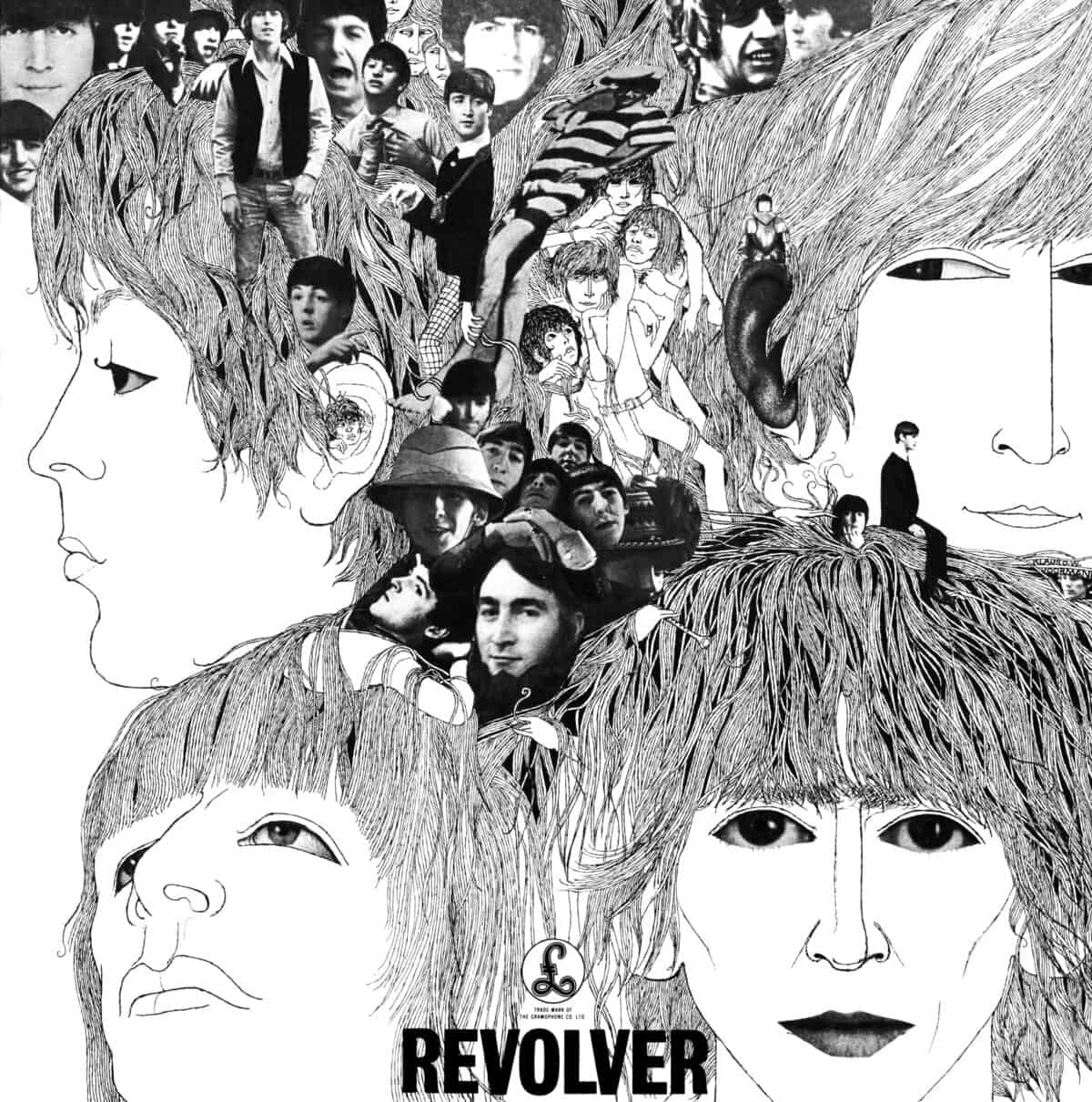
Released in August 1966, Revolver was the seventh studio album by The Beatles and is widely regarded as one of the greatest and most influential albums ever recorded. Building on the musical experimentation that began with Rubber Soul, the album saw John Lennon, Paul McCartney, George Harrison and Ringo Starr pushing the boundaries of what popular music could be.
The album introduced groundbreaking recording techniques, innovative studio effects and a wider range of musical influences than had previously been heard on a Beatles record. Songs such as “Eleanor Rigby”, “Tomorrow Never Knows”, “Taxman”, “Here, There and Everywhere” and “For No One” demonstrated remarkable growth in songwriting, production and musical ambition.
Revolver was also significant because it was recorded shortly before The Beatles stopped touring. Freed from the need to recreate their songs on stage, the band and producer George Martin began using the recording studio as an instrument in its own right. The result was an album that helped redefine modern music and influenced countless artists in the decades that followed.
Many critics consider Revolver to be the album where The Beatles fully transformed from a hugely successful pop group into pioneering recording artists. More than sixty years after its release, it remains one of the most celebrated albums in music history.
Revolver was the seventh album released by The Beatles.
Buy This Album!
When was Revolver recorded?
1966
Revolver was recorded at EMI Studios in Abbey Road, London, during 1966. By this stage of their career, The Beatles had become increasingly interested in experimenting with new sounds and recording techniques.
Rather than simply recording songs that could be performed live on stage, the band began treating the recording studio as a creative tool in its own right. Producer George Martin and engineer Geoff Emerick helped turn many of the group’s ambitious ideas into reality, resulting in some of the most innovative recordings of the decade.
The sessions produced a remarkable variety of music, ranging from string-based arrangements and Indian-inspired compositions to psychedelic soundscapes and groundbreaking studio effects.
When was Revolver released?
1966
Revolver was released on 5 August 1966 in the United Kingdom and quickly became another commercial success for The Beatles. The album topped the charts and received widespread praise from critics and fans alike.
Its release came during a period of major change for the band. Within weeks of the album’s arrival, The Beatles would perform their final commercial concert tour, allowing them to focus entirely on studio recording and creative experimentation.
Today, Revolver is widely recognised as one of the defining albums of the 1960s.
Why Is Revolver Important?
Many music historians regard Revolver as one of the most important albums ever recorded.
While Rubber Soul showed The Beatles moving beyond their early pop sound, Revolver demonstrated how far they could push the boundaries of popular music. The album combined innovative production techniques with ambitious songwriting, creating a record unlike anything audiences had heard before.
Songs such as “Eleanor Rigby” challenged traditional ideas about what a pop song could be, while tracks like “Tomorrow Never Knows” explored psychedelic sounds and studio experimentation that would influence generations of musicians.
The album showed that popular music could be artistic, experimental and commercially successful at the same time.
Musical Innovation on Revolver
One of the reasons Revolver remains so influential is its extraordinary level of innovation.
The album introduced listeners to a wide range of new sounds and recording techniques. George Harrison’s “Love You To” explored Indian classical music, while “Tomorrow Never Knows” featured tape loops, reversed recordings and experimental production effects rarely heard in mainstream music.
“Eleanor Rigby” abandoned the traditional rock band arrangement entirely, relying on a string octet to create its distinctive sound. Elsewhere, songs such as “I’m Only Sleeping” utilised backwards guitar parts, helping create the album’s dreamlike atmosphere.
Many of these recording techniques became standard tools in modern music production.
Why Revolver Changed Popular Music
Revolver changed expectations of what a rock album could be. Rather than relying on straightforward love songs and traditional recording methods, The Beatles embraced experimentation, new instruments and innovative studio techniques. The album introduced many listeners to Indian music, orchestral arrangements and psychedelic production effects.
Its influence can be heard in the work of countless artists who followed, and many critics regard it as one of the key recordings that helped transform popular music into a more ambitious art form during the late 1960s.
The Role of George Martin and Geoff Emerick
Revolver would not have been possible without the contributions of producer George Martin and engineer Geoff Emerick.
Working closely with John Lennon, Paul McCartney, George Harrison and Ringo Starr, Martin and Emerick helped transform ambitious musical ideas into finished recordings. They experimented with microphone placement, tape manipulation and studio effects to achieve sounds that had never previously appeared on a pop record.
Their willingness to take creative risks played a crucial role in the album’s success and helped establish Abbey Road Studios as one of the most famous recording locations in the world.
Critical Reception
Upon release, Revolver received widespread acclaim and quickly became recognised as one of The Beatles’ finest achievements.
Modern critics frequently rank it among the greatest albums ever recorded, and it regularly appears near the top of “greatest albums of all time” lists. Many musicians have cited it as a major influence on their own work, praising its creativity, diversity and willingness to challenge musical conventions.
Over the decades, its reputation has continued to grow, with many commentators arguing that Revolver represents the moment when The Beatles reached their full creative potential.
The Legacy of Revolver
More than sixty years after its release, Revolver remains one of the most celebrated and influential albums in music history.
The record helped shape the development of psychedelic rock, progressive rock and modern studio production techniques. Its influence can be heard across countless genres and continues to inspire musicians today.
For many Beatles fans, Revolver represents the perfect balance between the band’s songwriting brilliance and their growing desire to experiment. The album paved the way for later masterpieces such as Sgt. Pepper’s Lonely Hearts Club Band while standing as a landmark achievement in its own right.
Today, it is widely considered not only one of The Beatles’ greatest albums, but one of the greatest albums ever made.
Which songs are on the album?
There are 14 songs on the Revolver album.
You can see the track list below with links to an article for each song for more info!
Tracklist
1) Taxman
2) Eleanor Rigby
3) I’m Only Sleeping
4) Love You To
5) Here, There and Everywhere
6) Yellow Submarine
7) She Said She Said
8) Good Day Sunshine
9) And Your Bird Can Sing
10) For No One
11) Doctor Robert
12) I Want To Tell You
13) Got To Get You Into My Life
14) Tomorrow Never Knows
FAQ’s
What was The Beatles’ first studio album?
Please Please Me was The Beatles’ first studio album, released on 22 March 1963.
What was The Beatles’ last studio album?
Let It Be was the last Beatles album to be released, arriving on 8 May 1970.
How many studio albums did The Beatles release?
The Beatles released 12 studio albums in the UK between 1963 and 1970.
What was The Beatles’ best-selling album in the UK?
Sgt. Pepper’s Lonely Hearts Club Band is The Beatles’ best-selling studio album in the UK and one of the best-selling albums in British chart history.
Which Beatles album sold the most copies worldwide?
Abbey Road is generally regarded as The Beatles’ best-selling album worldwide.
What was The Beatles’ biggest hit?
Hey Jude is widely considered The Beatles’ biggest hit, thanks to its global success and enduring popularity.
What was The Beatles’ first UK Number 1 single?
From Me to You became The Beatles’ first UK Number 1 single in May 1963.
What was the first Beatles song to be released?
Love Me Do was the first Beatles single, released on 5 October 1962.
What was the final album The Beatles recorded together?
Although Let It Be was released last, Abbey Road was the final album recorded by all four Beatles.
Why are there different Beatles album lists in the UK and the US?
During the 1960s, American record companies often changed track listings and release schedules, creating different UK and US album catalogues.
What was The Beatles’ first Number 1 in America?
I Want to Hold Your Hand was The Beatles’ first Number 1 single on the US Billboard Hot 100.
Which Beatles album should I listen to first?
Many fans recommend Abbey Road as the best starting point because it features some of the band’s most famous songs and showcases their musical evolution.
What is considered The Beatles’ best album?
The albums most frequently named as The Beatles’ greatest are Abbey Road, Revolver, and Sgt. Pepper’s Lonely Hearts Club Band.
Which Beatles album features the Abbey Road crossing?
Abbey Road, released in 1969, famously features the band walking across the zebra crossing outside Abbey Road Studios in London.
Which Beatles album has the most famous cover?
Sgt. Pepper’s Lonely Hearts Club Band is often considered one of the most iconic album covers in music history.
Did The Beatles release any albums after they broke up?
No. Let It Be was released shortly after the band’s breakup was announced, but no new studio albums were recorded after the split.