Released in November 1968, The Beatles, more commonly known as The White Album, was the ninth studio album by The Beatles and the band’s first double album. Featuring thirty tracks spread across two records, it remains one of the most ambitious and diverse releases in the group’s catalogue.
Unlike the colourful and highly structured approach of Sgt. Pepper’s Lonely Hearts Club Band, The White Album embraced simplicity, individuality and creative freedom. The album showcased the songwriting talents of John Lennon, Paul McCartney, George Harrison and Ringo Starr across an extraordinary range of musical styles, including rock, folk, blues, country, music hall, hard rock and experimental music.
The album contains many of The Beatles’ best-known songs, including “Back In The U.S.S.R.”, “While My Guitar Gently Weeps”, “Blackbird”, “Helter Skelter”, “Ob-La-Di, Ob-La-Da”, “Dear Prudence” and “Julia”. The sheer variety of material has helped make it one of the most discussed and analysed albums in popular music history.
Today, The White Album is widely regarded as one of the greatest and most influential albums ever recorded and represents a fascinating snapshot of The Beatles at one of the most creative periods of their career.
The White Album was the ninth album released by The Beatles.
When Was The White Album Recorded?
1968
The White Album was primarily recorded between May and October 1968 at EMI Studios in Abbey Road, London. The sessions took place shortly after The Beatles returned from a period of study in Rishikesh, India, where they spent time with Maharishi Mahesh Yogi and explored Transcendental Meditation.
The recording sessions were lengthy and sometimes challenging. By this stage, each member of the band was developing as an individual songwriter and musician, resulting in a wider variety of material than had appeared on previous albums.
Despite occasional creative differences, the sessions produced a remarkable collection of songs that demonstrated the range and depth of The Beatles’ musical abilities.
When Was The White Album Released?
1968
The White Album was released on 22 November 1968 in the United Kingdom and shortly afterwards in the United States.
The album quickly became a commercial success, reaching number one in multiple countries and selling millions of copies around the world. Its release generated enormous interest among fans who were eager to hear The Beatles’ first major project following Sgt. Pepper’s Lonely Hearts Club Band and Magical Mystery Tour.
More than fifty years later, it remains one of the best-selling albums in music history.
Buy This Album!
Why Is The White Album Important?
The White Album occupies a unique place in The Beatles’ story. Unlike previous albums, which often featured a shared artistic vision, this record highlighted the individual personalities and songwriting styles of all four band members.
For many listeners, the album offers the most complete picture of The Beatles’ creativity. Every musical idea seemed possible, from acoustic ballads and heavy rock to avant-garde sound experiments.
Many music historians view the album as a bridge between the psychedelic experimentation of 1967 and the more refined recordings that would later appear on Abbey Road.
Its influence can still be heard across countless genres today.
The Beatles’ First Double Album
The White Album was the first double album released by The Beatles and featured thirty songs spread across two records. At the time, double albums were still relatively uncommon in popular music, making the scale of the project particularly ambitious.
The larger format allowed John Lennon, Paul McCartney, George Harrison and Ringo Starr to include a much wider range of material than would normally fit on a standard album. Rather than selecting only a small group of songs, The Beatles embraced variety and experimentation, resulting in one of the most diverse records ever released.
Many music historians believe the album’s length and stylistic variety became one of its greatest strengths and helped inspire future double albums by numerous artists.
The Beatles In India
One of the most important influences on The White Album was The Beatles’ visit to India in early 1968.
During their stay in Rishikesh, the band spent time studying meditation and writing new songs away from the pressures of fame and touring. The peaceful environment proved highly productive, with many of the songs that eventually appeared on The White Album being written during this period.
The experience also influenced the album’s lyrical themes and acoustic sound, particularly on songs such as “Dear Prudence”, “Julia” and “Blackbird”.
For Beatles fans, the India trip remains one of the most significant chapters in the band’s history.
Musical Variety On The White Album
The White Album is often praised for its extraordinary variety.
Across thirty tracks, listeners can hear influences including:
- Rock and Roll
- Acoustic Folk
- Blues
- Country Music
- Music Hall
- Hard Rock
- Experimental Music
- Psychedelia
Songs such as “Blackbird” and “Julia” showcase intimate acoustic performances, while “Helter Skelter” pushed rock music towards a heavier and more aggressive sound.
This willingness to explore different styles helped make the album one of the most adventurous releases of the 1960s.
The album also highlighted George Harrison’s growing confidence as a songwriter, particularly through songs such as “While My Guitar Gently Weeps”, which has since become one of the most celebrated recordings in The Beatles’ catalogue.
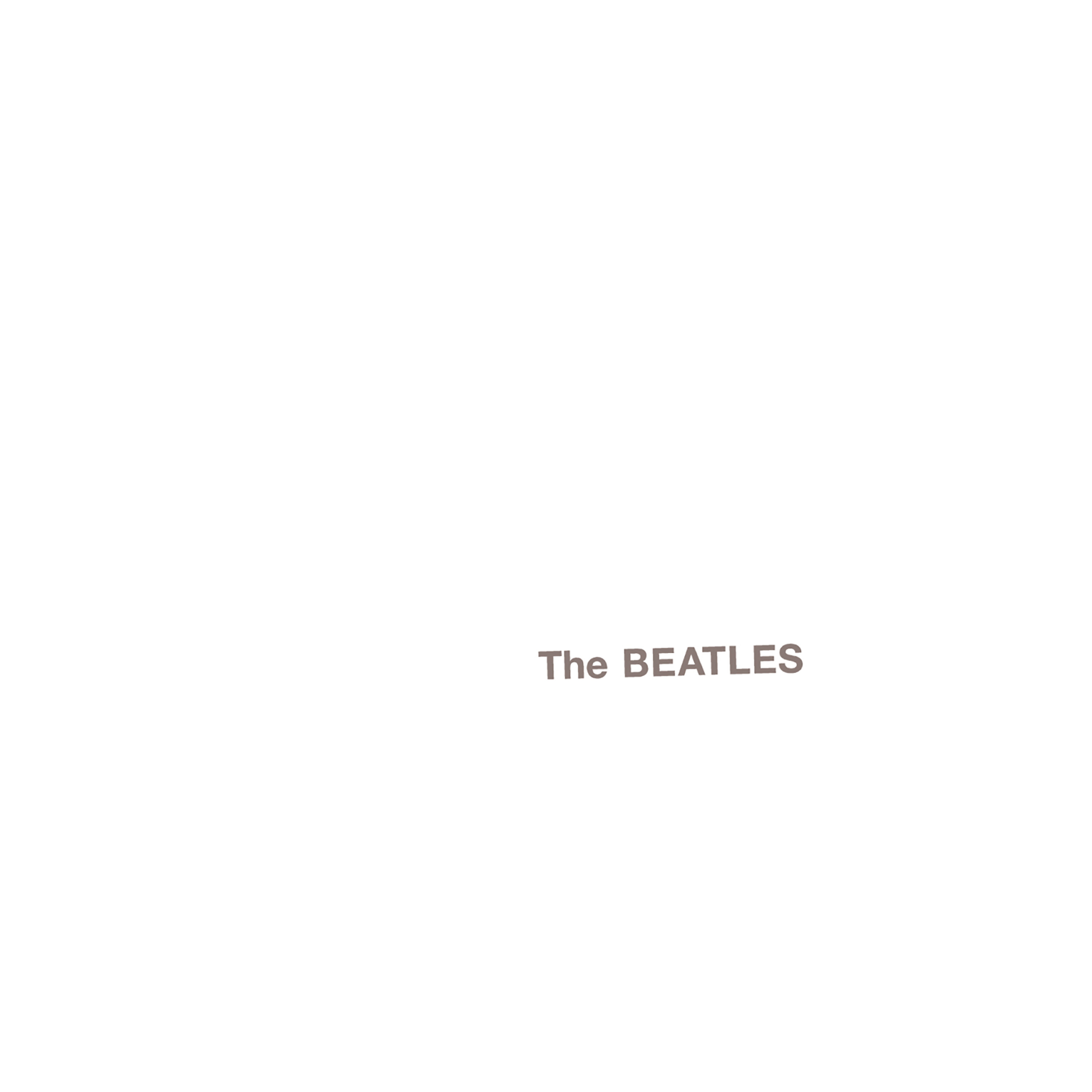
The White Album Cover
The album’s famous cover was designed by British artist Richard Hamilton.
In dramatic contrast to the colourful artwork of Sgt. Pepper’s Lonely Hearts Club Band, the cover featured an almost entirely white design with only the band’s name embossed on the surface.
Early copies were individually numbered, making each album feel unique to the owner.
Today, the minimalist design is regarded as one of the most recognisable album covers in music history and remains a striking example of how simplicity can create a powerful visual statement.
Recording Sessions and Creative Differences
The White Album sessions revealed how much The Beatles had evolved as individual musicians and songwriters.
Each member brought increasingly personal material into the studio, and the recording process often focused on smaller groups of musicians rather than the full band working together simultaneously.
Despite occasional tensions, the sessions produced some of the finest performances in The Beatles’ catalogue. The differences in songwriting styles also contributed to the album’s remarkable diversity and enduring appeal.
Many historians regard the album as both a celebration of The Beatles’ creativity and an early indication of the different artistic directions each member would eventually pursue.
Critical Reception
Upon release, The White Album received strong sales and generally positive reviews, although some critics were divided by its length and variety.
Over time, however, its reputation has grown considerably. Modern critics frequently rank it among the greatest albums ever recorded, praising its ambition, creativity and breadth of musical styles.
Many artists have cited The White Album as a major influence on their own work, and it continues to appear on lists of the greatest albums in popular music history.
The Legacy of The White Album
More than half a century after its release, The White Album remains one of the most celebrated and discussed albums ever made.
Its influence extends across rock, folk, alternative, indie and experimental music, while songs such as “While My Guitar Gently Weeps”, “Blackbird” and “Helter Skelter” continue to attract new generations of listeners.
For many Beatles fans, The White Album represents the band’s creative freedom at its peak. The album demonstrated that popular music could embrace almost any style or idea while still achieving enormous commercial success.
Today, it stands alongside Revolver, Sgt. Pepper’s Lonely Hearts Club Band and Abbey Road as one of the defining achievements of The Beatles’ career.
Which songs are on the album?
There are 30 songs on The Beatles (The White Album).
You can see the track list below, with links to dedicated articles for each song on the album.
Tracklist
Side One
1) Back In The U.S.S.R.
2) Dear Prudence
3) Glass Onion
4) Ob-La-Di, Ob-La-Da
5) Wild Honey Pie
6) The Continuing Story Of Bungalow Bill
7) While My Guitar Gently Weeps
8) Happiness Is A Warm Gun
Side Two
9) Martha My Dear
10) I’m So Tired
11) Blackbird
12) Piggies
13) Rocky Raccoon
14) Don’t Pass Me By
15) Why Don’t We Do It In The Road?
16) I Will
17) Julia
Side Three
18) Birthday
19) Yer Blues
20) Mother Nature’s Son
21) Everybody’s Got Something To Hide Except Me And My Monkey
22) Sexy Sadie
23) Helter Skelter
24) Long, Long, Long
Side Four
25) Revolution 1
26) Honey Pie
27) Savoy Truffle
28) Cry Baby Cry
29) Revolution 9
30) Good Night
FAQ’s
What was The Beatles’ first studio album?
Please Please Me was The Beatles’ first studio album, released on 22 March 1963.
What was The Beatles’ last studio album?
Let It Be was the last Beatles album to be released, arriving on 8 May 1970.
How many studio albums did The Beatles release?
The Beatles released 12 studio albums in the UK between 1963 and 1970.
What was The Beatles’ best-selling album in the UK?
Sgt. Pepper’s Lonely Hearts Club Band is The Beatles’ best-selling studio album in the UK and one of the best-selling albums in British chart history.
Which Beatles album sold the most copies worldwide?
Abbey Road is generally regarded as The Beatles’ best-selling album worldwide.
What was The Beatles’ biggest hit?
Hey Jude is widely considered The Beatles’ biggest hit, thanks to its global success and enduring popularity.
What was The Beatles’ first UK Number 1 single?
From Me to You became The Beatles’ first UK Number 1 single in May 1963.
What was the first Beatles song to be released?
Love Me Do was the first Beatles single, released on 5 October 1962.
What was the final album The Beatles recorded together?
Although Let It Be was released last, Abbey Road was the final album recorded by all four Beatles.
Why are there different Beatles album lists in the UK and the US?
During the 1960s, American record companies often changed track listings and release schedules, creating different UK and US album catalogues.
What was The Beatles’ first Number 1 in America?
I Want to Hold Your Hand was The Beatles’ first Number 1 single on the US Billboard Hot 100.
Which Beatles album should I listen to first?
Many fans recommend Abbey Road as the best starting point because it features some of the band’s most famous songs and showcases their musical evolution.
What is considered The Beatles’ best album?
The albums most frequently named as The Beatles’ greatest are Abbey Road, Revolver, and Sgt. Pepper’s Lonely Hearts Club Band.
Which Beatles album features the Abbey Road crossing?
Abbey Road, released in 1969, famously features the band walking across the zebra crossing outside Abbey Road Studios in London.
Which Beatles album has the most famous cover?
Sgt. Pepper’s Lonely Hearts Club Band is often considered one of the most iconic album covers in music history.
Did The Beatles release any albums after they broke up?
No. Let It Be was released shortly after the band’s breakup was announced, but no new studio albums were recorded after the split.
Listen Online with Amazon Music Unlimited
Great benefits of Amazon Music Unlimited include:
Unlimited access to millions of songs – including all the latest and greatest artists and albums, as well as thousands of playlists and stations
New music all the time – the newest releases as soon as they are available
Ad-free listening – uninterrupted, high quality audio
Offline listening – download to listen to your favourite music, wherever you are
Hands-free listening with Alexa – exclusive voice features
Looking for something digital?
Why not sign up to audible and get books, podcasts & more!
Prefer to read instead of listen? Sign up to Kindle Unlimited instead!